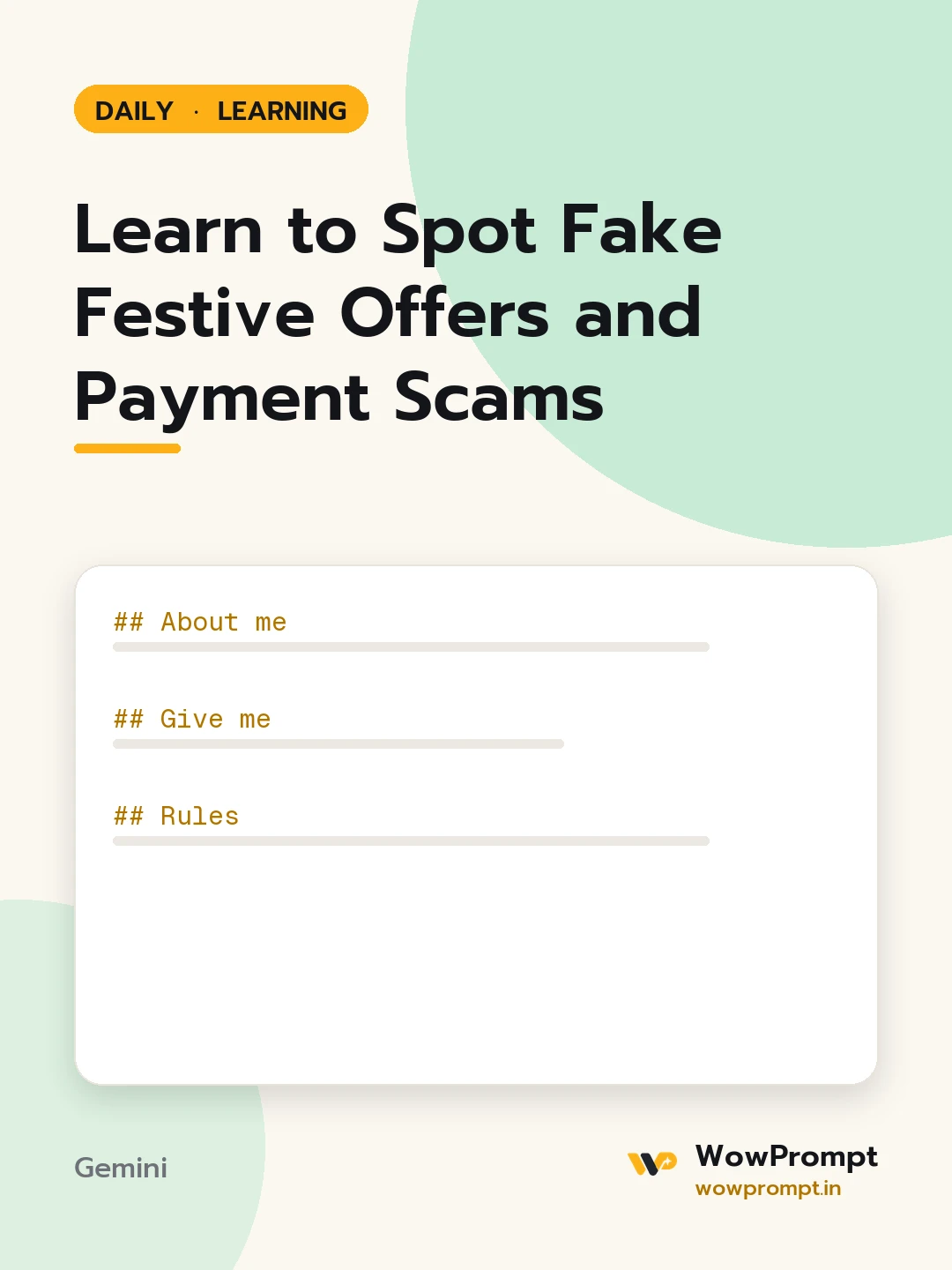
Learn to Spot Fake Festive Offers and Payment Scams
A short lesson on spotting the scams that rise in the festive season, such as fake sale links, lucky-draw messages, parcel delivery texts and UPI collect requests, with real-looking examples, a quick check routine and what to do if you have been caught. Use it before Diwali shopping or to teach parents and elders.
The output this prompt produced, unedited.
The prompt
About me
Who is learning: [myself / my parents / a group of elders]
How we shop and pay: [apps, UPI, cards, cash on delivery]
Language and level: [plain English / simple words for elders]
Anything that already happened to us: [details or none]
Give me
Five common festive scam types, each in two lines: how it looks and the giveaway sign.
Six practice messages, some real-looking and some fake, with answers below them.
A 30-second check routine before tapping any link or approving a payment.
Steps to take straight away if money was lost, including reporting to the bank and the national cyber crime helpline.
A short version I can forward to the family group.
Rules
Never include a real link, number or brand in the practice messages; use [link] and [number].
Remind that receiving money never needs a PIN.
Plain words, no fear tactics.
festive season scamsfake diwali offer messagesupi scam awarenesshow to spot fake linksonline shopping fraud tips
How to run this
Copy the prompt and paste it into Gemini, then set the aspect ratio to 3:4. No reference photo is needed for this one.
The prompt is written in Markdown with each part under its own heading, which is what the copy action hands over. Change one section at a time, keeping the rest intact, so you can tell which change did the work.