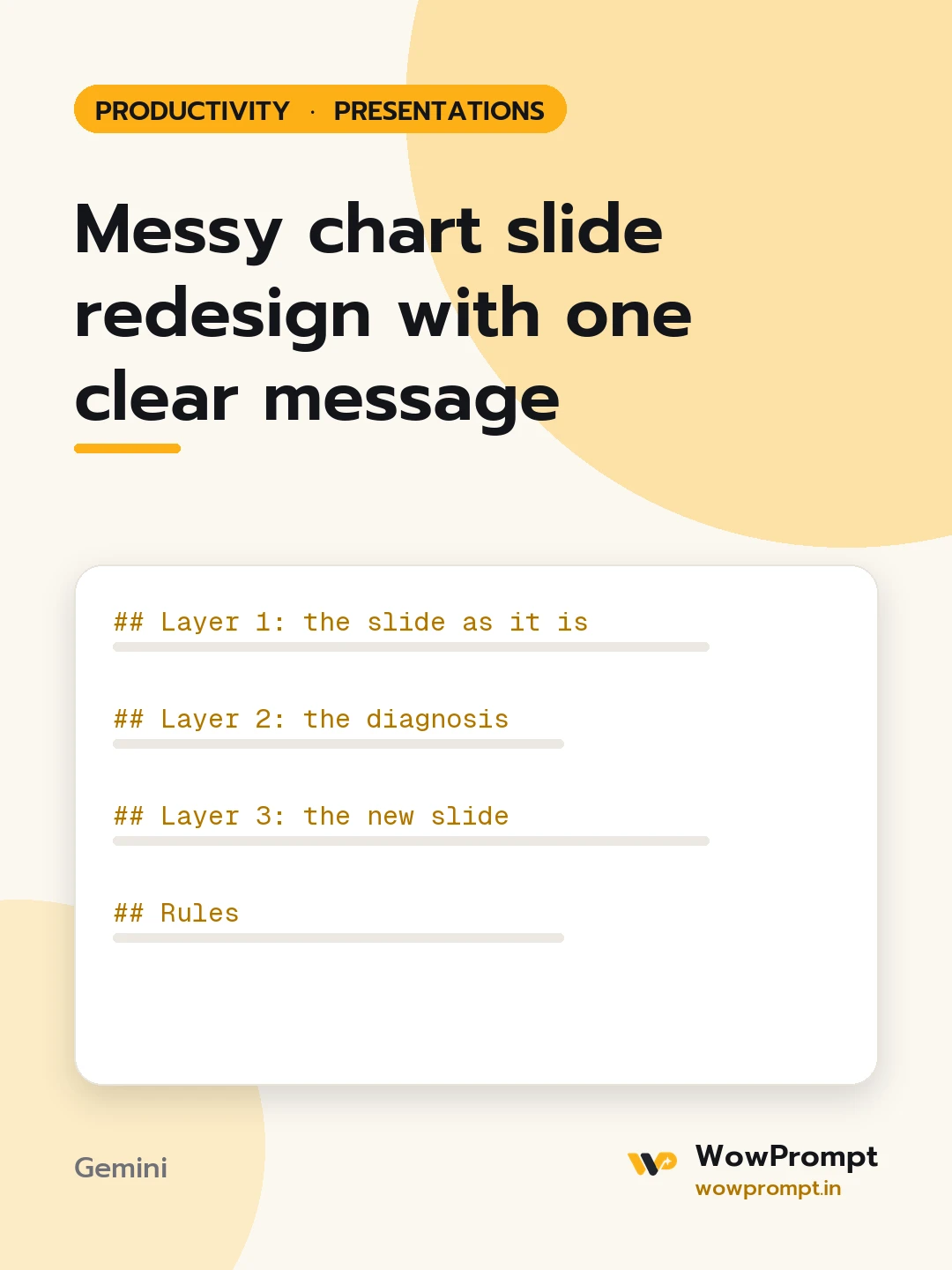
Rebuilds one cluttered chart slide into a clear one: a headline that states the finding, the right chart type, only the data that supports the point, direct labels and one highlight colour. Use it when a slide has a crowded chart, a legend nobody reads or a title like "Sales data".
The output this prompt produced, unedited.
The prompt
Layer 1: the slide as it is
Current title: [e.g. "Region-wise sales FY26"]
Chart type now: [e.g. a 3D pie with 9 slices, a clustered bar with 12 series]
The data behind it: [paste the table]
What the presenter wants the audience to take away: [in their own words, or unsure]
Audience and time on this slide: [e.g. senior leaders, one minute]
Colours allowed: [brand colours, or any]
Layer 2: the diagnosis
Find the single message the data actually supports; if the presenter's message is not supported, say so.
Pick the chart type that shows that message: a line for change over time, sorted bars for ranking, a stacked bar only for parts of a whole with few parts, a table when exact numbers matter more than shape.
List everything that does not help the message: 3D effects, gridlines, a legend that could be direct labels, extra decimals, unrelated series.
Layer 3: the new slide
Headline as a full sentence of at most 12 words stating the finding, such as "South grew fastest and now leads all regions".
Chart type and why, in one line.
Data to keep, and data to move to an appendix slide.
Highlight: one colour for the point that matters, grey for the rest.
Labels: direct labels on lines or bars, axis starting at zero for bars, units in the axis title.
Layout: headline at top, chart filling two thirds, one short source line at the bottom.
Speaker notes of up to 40 words that say the finding first, then the number behind it.
Rules
Never change or round the data in a way that changes the story.
If two messages compete, split them into two slides.
Copy the prompt and paste it into Gemini, then set the aspect ratio to 3:4. No reference photo is needed for this one.
The prompt is written in Markdown with each part under its own heading, which is what the copy action hands over. Change one section at a time, keeping the rest intact, so you can tell which change did the work.