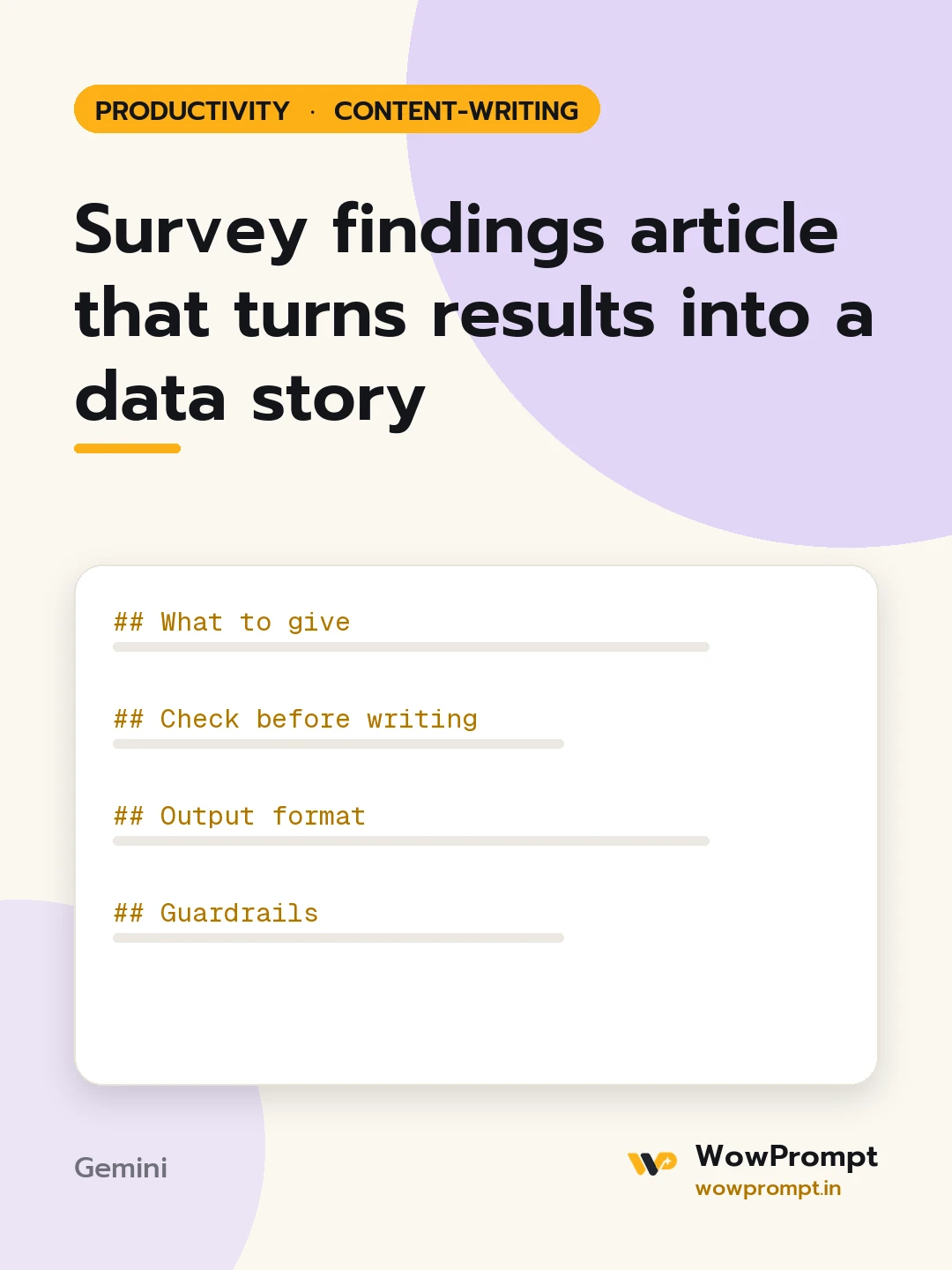
Survey findings article that turns results into a data story
Writes a publishable article from a company's own survey results: a clear headline finding, the most interesting numbers explained in plain words, charts to build, method notes and quotes from open answers. Use it when a survey is done and the team wants coverage, links and sales conversations from it.
The output this prompt produced, unedited.
The prompt
What to give
Survey topic and who answered: [e.g. 850 small restaurant owners across 12 Indian cities]
When and how it was run: [e.g. online, September 2026, through a partner list]
Results: [paste question-by-question results with counts or percentages]
Open-ended answers: [paste a sample, names removed]
Company and why it ran the survey: [e.g. a restaurant billing software company]
Pick the single most surprising or useful finding as the headline.
Choose five supporting numbers, each tied to a decision a reader could make.
Flag any percentage based on fewer than 100 answers and say so in the text.
Note where results split clearly by group, such as city size or business age.
Pick three quotes from open answers that show the numbers in real words.
Output format
Five headline options, each built on a number.
Article of [900 to 1,300] words: summary in three bullets, one section per key finding, what it means for the reader, and a short closing section.
Chart list: chart type, data it shows, and a plain title for each.
Method box: who, how many, when, how collected, margin of caution.
Three short lines a journalist could quote.
Guardrails
Never round numbers in a way that changes the story, and never present a correlation as a cause.
The company's product is mentioned once at most, near the end.
Use only the results pasted.
survey results articleoriginal research contentdata storysurvey report writingresearch based contentlink earning content
How to run this
Copy the prompt and paste it into Gemini, then set the aspect ratio to 3:4. No reference photo is needed for this one.
The prompt is written in Markdown with each part under its own heading, which is what the copy action hands over. Change one section at a time, keeping the rest intact, so you can tell which change did the work.