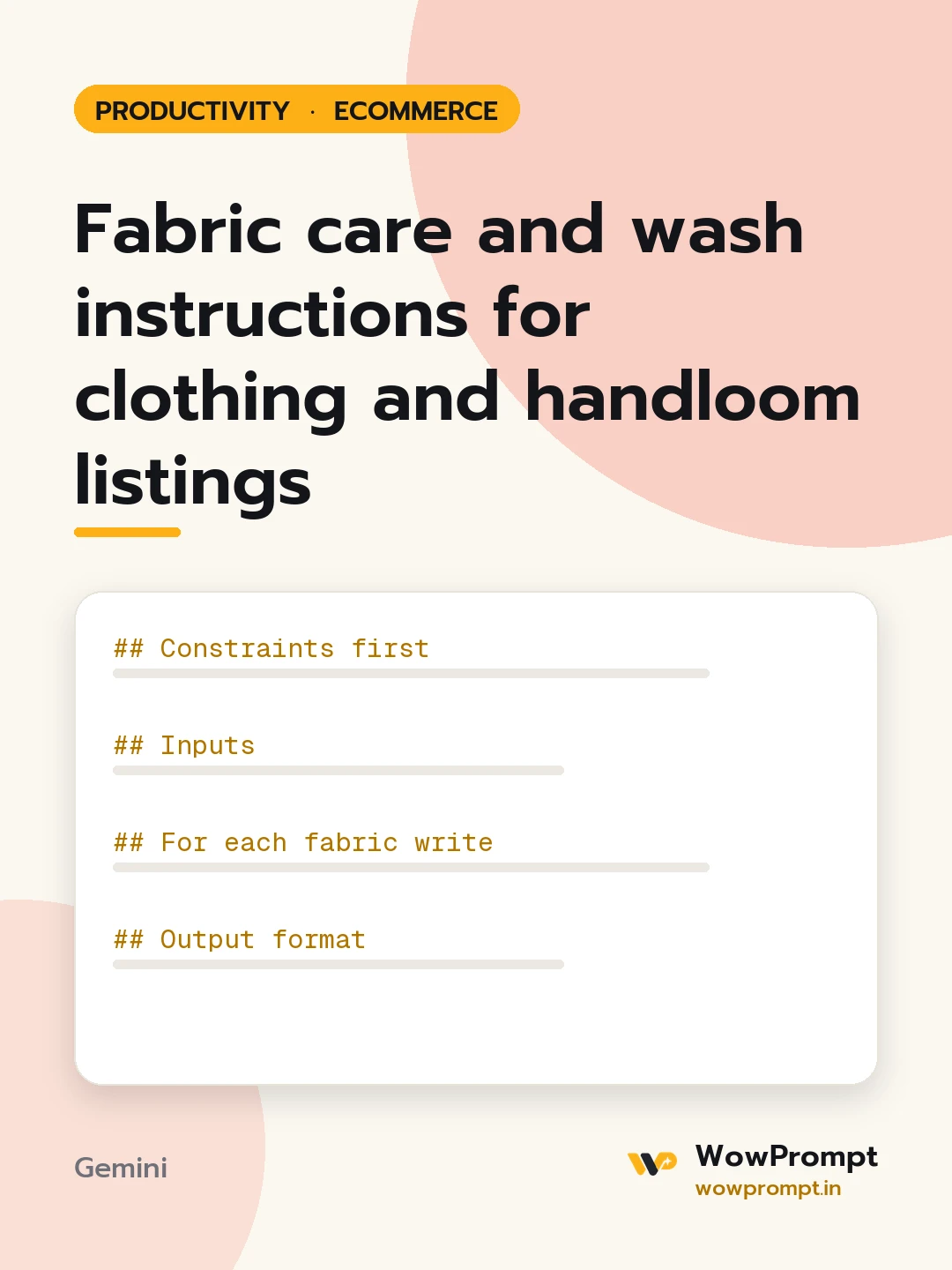
Fabric care and wash instructions for clothing and handloom listings
Writes care instructions for each fabric and finish in a clothing range, for the product page, the care label and the insert card, including colour bleeding, shrinkage and ironing advice in plain words. Use it for sarees, kurtas, block prints and handloom pieces, where wrong washing causes most complaints and returns.
The output this prompt produced, unedited.
The prompt
Constraints first
Use only fabric facts given or widely accepted; mark anything uncertain as [confirm with maker].
Plain words a first-time buyer understands; no textile jargon without a short meaning.
First wash advice comes first, since that is when colours bleed and cotton shrinks.
Never claim "colourfast" or "no shrinkage" unless the inputs say it was tested.
Inputs
Products with fabric, dye and finish: [e.g. Chanderi silk-cotton saree with zari border; hand block printed cotton kurta with natural dyes]
Known issues from reviews or returns: [paste]
Washing facts from the maker: [paste, or none]
Where the text will appear: product page, care label, insert card
For each fabric write
Washing: hand or machine, water temperature, detergent type, soaking limits.
Drying: shade or sun, flat or hanging.
Ironing and steaming, with heat level and whether to iron on the reverse.
Storage, including zari and embroidery care.
What is normal, such as slight colour release or slub texture, so buyers do not report it as a fault.
Output format
Product page care block for each fabric, under 90 words.
A care label line under 60 characters for each.
One insert card covering the whole range, under 120 words.
Claims to confirm with the maker.
fabric care instructionswash care labelhandloom care guidesaree care tipsclothing product pagereduce returns
How to run this
Copy the prompt and paste it into Gemini, then set the aspect ratio to 3:4. No reference photo is needed for this one.
The prompt is written in Markdown with each part under its own heading, which is what the copy action hands over. Change one section at a time, keeping the rest intact, so you can tell which change did the work.