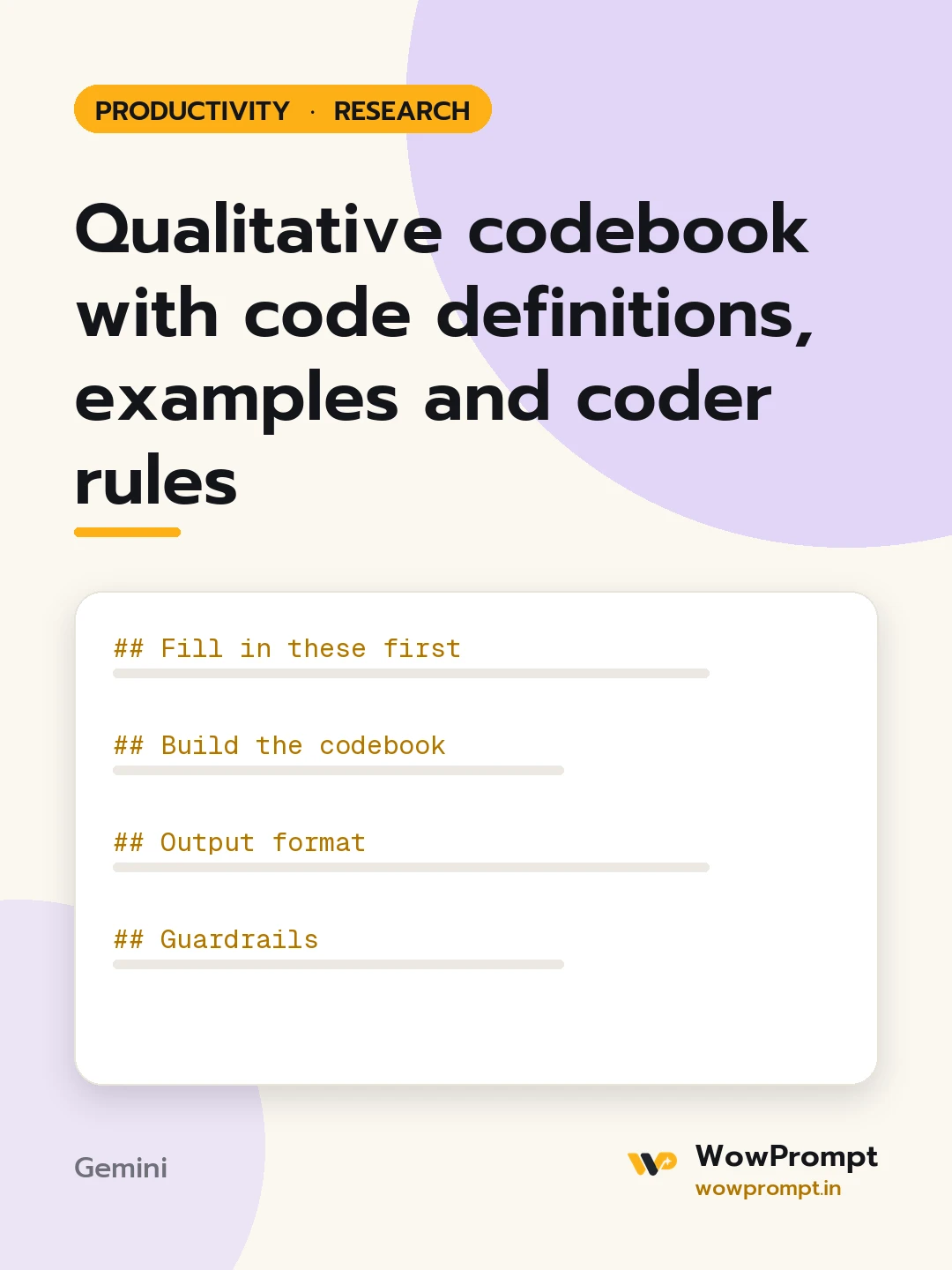
Qualitative codebook with code definitions, examples and coder rules
Builds a codebook for coding interview transcripts, open survey answers or field notes: each code with a short name, a definition, when to use it, when not to, a real example quote and a near-miss, plus rules for two coders to agree. Use it before coding begins on a qualitative study or a large set of customer verbatims, so the codes stay consistent across people and weeks.
The output this prompt produced, unedited.
The prompt
Fill in these first
Study and research question: [e.g. why small shop owners stop using a billing app]
Data type and amount: [e.g. 18 interview transcripts, about 40 pages]
Approach: [deductive from a framework, inductive from the data, or both]
Framework or starting themes, if any: [paste, or none]
Sample of the data: [paste three to five excerpts]
Number of coders: [e.g. two]
Build the codebook
Propose parent themes, three to seven of them.
Under each, list codes. For every code give:
Code name in two to four words
Definition in one sentence
Use when: the exact signals that qualify
Do not use when: the closest confusion and which code to use instead
Example: a quote from the sample that fits
Near-miss: a quote that looks similar but belongs elsewhere
Add an "other" code with a rule for when it triggers a new code.
Output format
| Theme | Code | Definition | Use when | Do not use when | Example | Near-miss |
Coder rules: unit of coding (sentence, turn or passage), whether one passage can carry several codes, and how to log a new code.
Agreement plan: both coders code the same 10 to 20 percent of the data, compare, discuss each disagreement, update the codebook, and record agreement with a simple percentage or Cohen's kappa.
A change log template: | Date | Change | Reason | Agreed by |
Guardrails
Every example must come from the sample given; if none fits, write "needs an example from the data".
Keep codes descriptive at first; interpretation belongs in the themes, not the codes.
Copy the prompt and paste it into Gemini, then set the aspect ratio to 3:4. No reference photo is needed for this one.
The prompt is written in Markdown with each part under its own heading, which is what the copy action hands over. Change one section at a time, keeping the rest intact, so you can tell which change did the work.