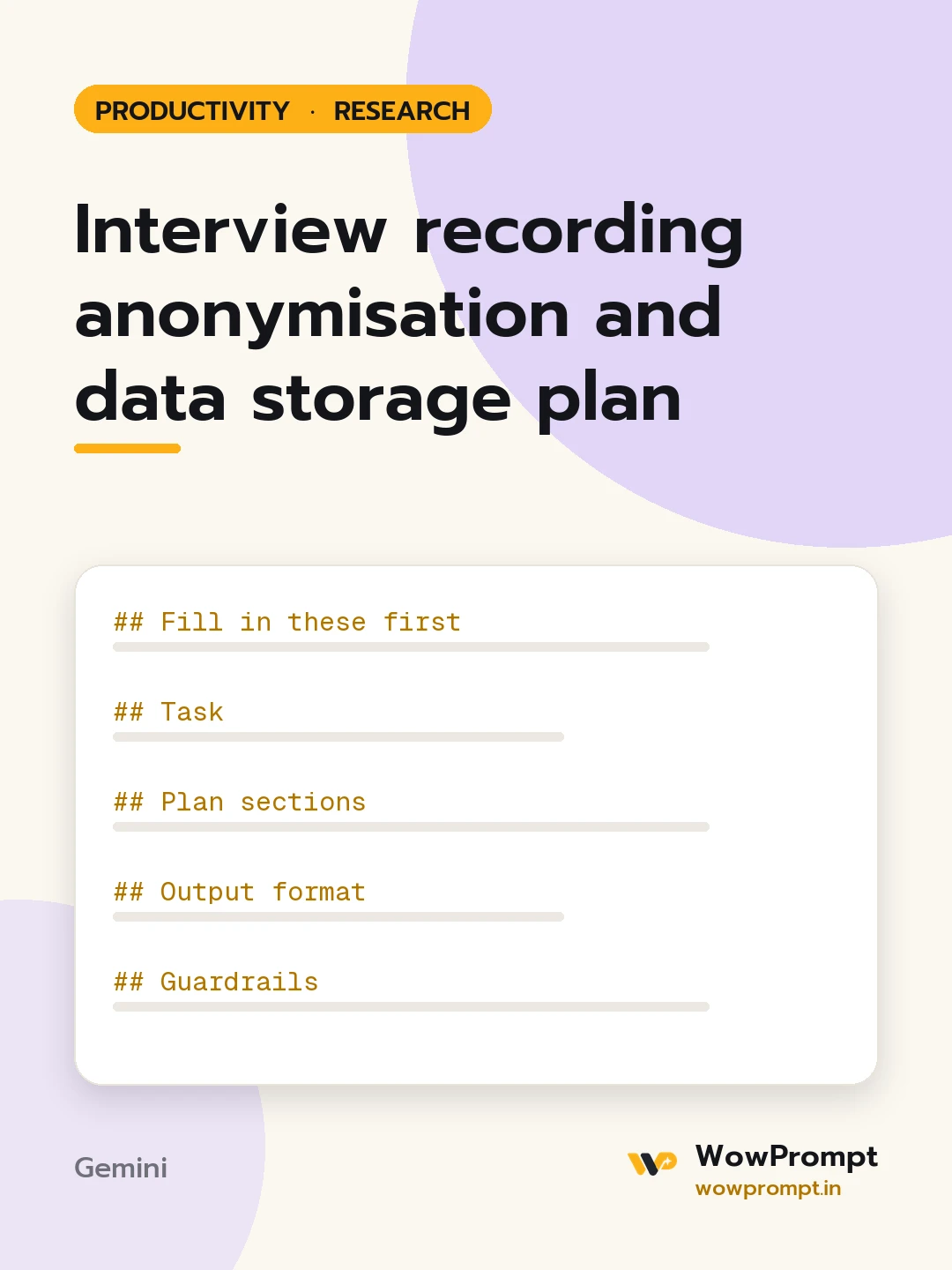
Fill in these first
- Study: [topic, number of participants, format such as video calls]
- Data collected: [e.g. recordings, auto transcripts, notes, screener answers, consent forms]
- Where data lives now: [e.g. a shared drive, a recording tool, laptops]
- Who needs access: [researchers, designers, the client, an agency]
- Rules that apply: [e.g. India's DPDP Act, GDPR, a company policy, consent form wording]
- Transcript excerpt to anonymise: [paste]
Task
Write a practical plan a small team can follow and show it working on the excerpt.
Plan sections
- Identifiers to remove or replace: names, employers, places smaller than a city, phone numbers, email addresses, account numbers, rare job titles, unique events.
- Pseudonym scheme: P01, P02 and role labels such as [Shop owner, Pune region]; the key that links codes to people kept separately with restricted access.
- Storage: one approved location per data type, access by named role, no copies on personal devices.
- Sharing: who receives anonymised transcripts and who may see raw recordings.
- Retention and deletion: when recordings, keys and transcripts are deleted, and who confirms it.
Output format
- | Data type | Where stored | Who can access | Anonymised before sharing | Delete after |
- Identifier rules as a list with an example replacement for each.
- The excerpt anonymised, with each replacement in [square brackets].
- A ten-point checklist to run at the end of the study.
Guardrails
- Do not claim the plan makes the team compliant with any law; say which points need a privacy or legal review.
- Keep meaning intact; replace a detail with a category, never delete a sentence that carries an insight.
- Never put the key and the anonymised files in the same shared folder.




